National Shrimp Day: The Journey Shrimp Takes Before It Reaches Your Plate

From shrimp and grits to shrimp Alfredo, this lean and versatile protein shows up in kitchens everywhere quick to cook, delicious, and easy to love. This National Shrimp Day, we’re taking a behind-the-scenes look at the journey shrimp takes before it reaches your plate.

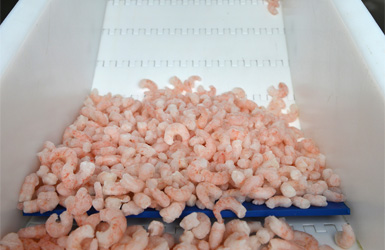
Inside a modern seafood processing facility, shrimp moves through a carefully coordinated series of steps—from preparation and cleaning to cooling, packaging, and freezing. Along the way, conveyor belts help keep each stage running smoothly by supporting freshness, food safety, and efficient product flow.

Raw Receiving, Peeling & Deveining

That journey starts as shrimp arrives at the processing facility and moves into raw receiving, peeling, and deveining—early steps where cleanliness and careful handling matter most.

At this stage, shrimp is in its most hygiene-critical state. During raw receiving, peeling, and deveining, product is exposed to ice, meltwater, and raw proteins, making sanitation and cleanability essential. These areas also require frequent washdowns to meet strict food-safety standards.

Belting used here must resist moisture and help reduce contamination risks. Soliflex PRO is well suited for these early processes because its solid, homogeneous construction contains no fabric layers that can absorb water or harbor bacteria. Its smooth, non-porous surface supports fast, effective cleaning, helping maintain cleanliness and reliability as shrimp moves through initial preparation.
Washing, Dewatering, Cooling & Glazing

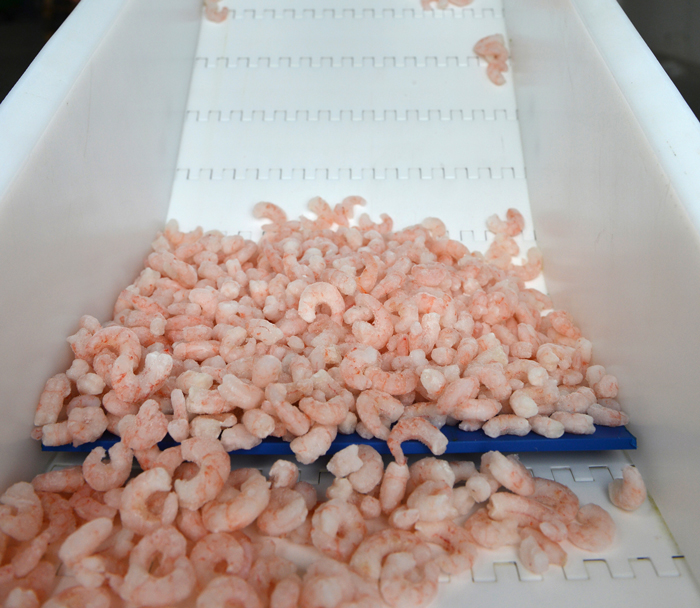
After raw handling, shrimp transitions into water-intensive processing. Washing and rinsing remove remaining debris, dewatering reduces excess moisture, and cooling and glazing help preserve freshness, appearance, and weight before packaging.

In the washing and dewatering phase, belts such as the uni® MPB closed‑surface belt help control shrimp movement while reducing contamination on the conveyor line. The closed surface prevents small, loose product from slipping through the belt, while pop‑up flights enable product indexing, elevation, and separation. A built‑in automatic scraper integrated with the pop‑up flights removes residual product from the belt—maximizing throughput and minimizing waste and product loss.

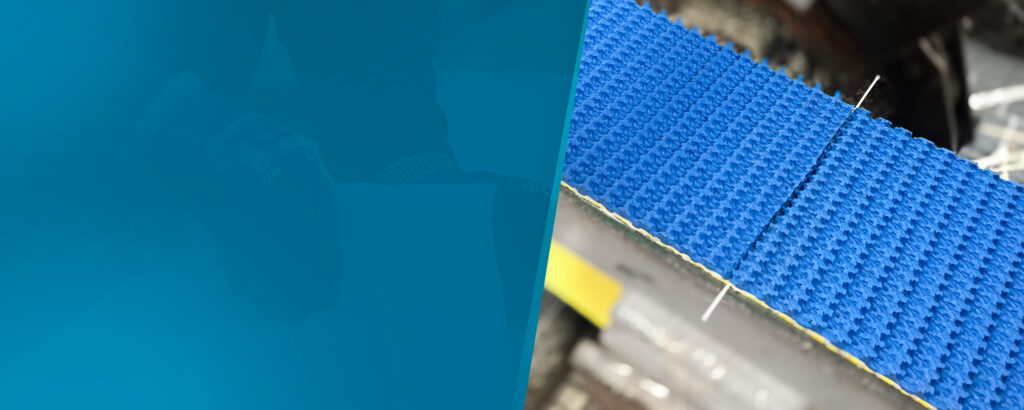
During cooling and glazing, processors frequently rely on belts like the uni® SNB M2 20% Nub Top. At this stage, shrimp is exposed to chilled water and ice as a thin glaze is applied to protect product quality. The nub-top surface helps prevent shrimp from sticking to the belt in cold, wet conditions—particularly at the belt return—helping reduce product loss and waste while supporting more efficient sanitation.

Together, these belting solutions help maintain cleanliness, improve product release, and support smooth movement through cooling and glazing before shrimp transitions to downstream packaging operations.

Packaging Infeed, Freezing & Pack-Out

Once shrimp reaches packaging infeed, the process shifts from handling loose product to moving sealed bags, trays, or pouches. These packages then travel through labeling, freezing, hardening, and pack-out in cold or frozen environments where consistent movement and durability are essential.
At this stage, reliable conveyance helps protect product integrity as shrimp moves through freezing tunnels and into cold storage before distribution.

From Processing Floor to Plate

From hygiene-critical raw handling to water-intensive processing and steady movement through cooling, glazing, and freezing, shrimp production demands different belt performance at every stage. When conveyor belts are selected to match the specific conditions of each application, including sanitation, drainage, product release, and temperature—processors can maintain sanitation, efficiency, and product integrity throughout the line.

That application-focused approach is what Belting Solved means in practice—supporting a smooth, reliable journey from processing floor to plate.
From Dough to Cheese Slices: MIR Spotlights the Belts Behind a Grilled Cheese

We’re diving into the sandwich we all know and love — the ooey‑gooey comfort of a grilled cheese, paired with the classic bowl of soup that makes it complete. As part of our National Grilled Cheese Day celebration, MIR is shining a spotlight on one of our partner’s essential belts supporting the bread‑making and cheese‑slicing steps behind every perfect melt. ( like this one) please replace the current intro with this one

Breadmaking: Where Clina Fits — and Why

Every grilled cheese starts long before the cheese hits the slicer — it begins with the bread. In the early stages of breadmaking, ingredients are mixed and kneaded into dough before moving into shaping, moulding, and eventually fermentation. As the dough becomes more delicate and takes on its final structure, it depends on conveying equipment that can move it cleanly without sticking, tearing, or deforming.

That’s why Esbelt’s Clina line is used at two consecutive stages of the breadmaking process. The first is during dough handling and forming, where the dough is manipulated, laminated, and moulded into shape. Its low‑adhesion surface, good release properties, and resistance to animal and vegetable fats help prevent sticking and buildup during these sticky, high‑hydration operations.

Immediately following this is the transfer into the proofing stage, where the shaped dough is conveyed into warm, humid fermentation conditions. Clina belts provide the dimensional stability, clean surface, and gentle, consistent movement required to protect dough structure as it enters the proofer — a point where even minor deformation can affect the final loaf.

These two back‑to‑back stages — dough shaping and proofing transfer — represent the key areas where Clina belts support bread quality before the process continues through proofing, baking, cooling, and packaging.

Cheese Processing: Where Novak Premium PU Matters Most — and Why

As production shifts from bakery to dairy applications, conveying continues to play a vital role in protecting product integrity — especially in late‑stage cheese processing, where belt performance directly affects slice quality, hygiene, and downstream efficiency.

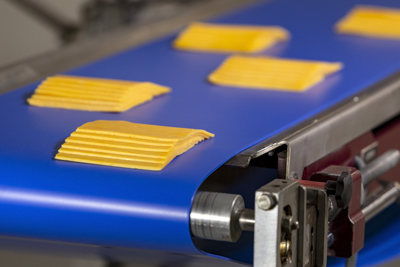
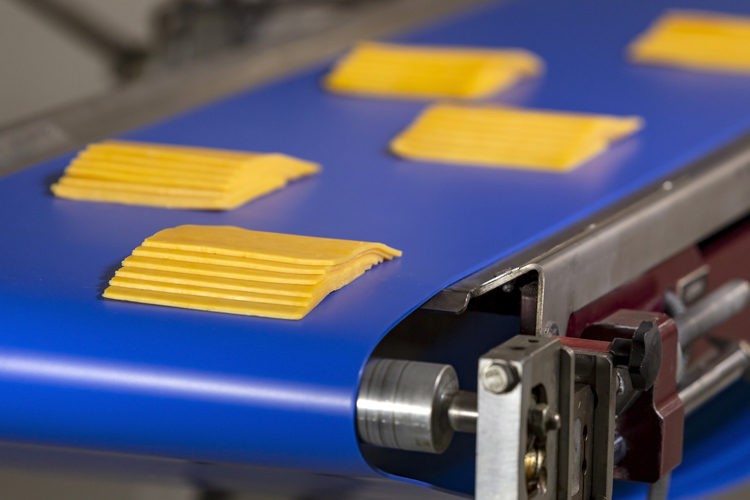
The esbelt Novak Premium PU line excels in the slicer infeed and immediate post‑slicing transfer stage, where formed and cooled cheese blocks require controlled, consistent feeding into the slicer. Its low‑adhesion, non‑porous matte‑silk cover helps prevent drag or sticking that can compromise slice uniformity.

As slices exit the blade, this same surface allows them to release cleanly, reducing tearing, curl‑back, or smearing — issues that commonly challenge high‑fat cheese lines. The belt’s strong resistance to dairy fats maintains stable performance during continuous contact with lipids.

Its antimicrobial and antibiofilm properties provide essential hygiene support at the stage where cheese is most exposed. And with slicing systems frequently relying on tight knife‑edge transfers, the Novak PU belt’s flexibility ensures smooth transitions into stacking, portioning, or packaging equipment without slice deformation.

Conclusion

From clean dough handling in the bakery stage to precise slicing and transfer in cheese production, the right solutions keep every ingredient moving with the consistency these processes demand — that’s Belting Solved.

Celebrate National Beer Day with MIR Belting:
Toasting Innovation in the Beverage Industry

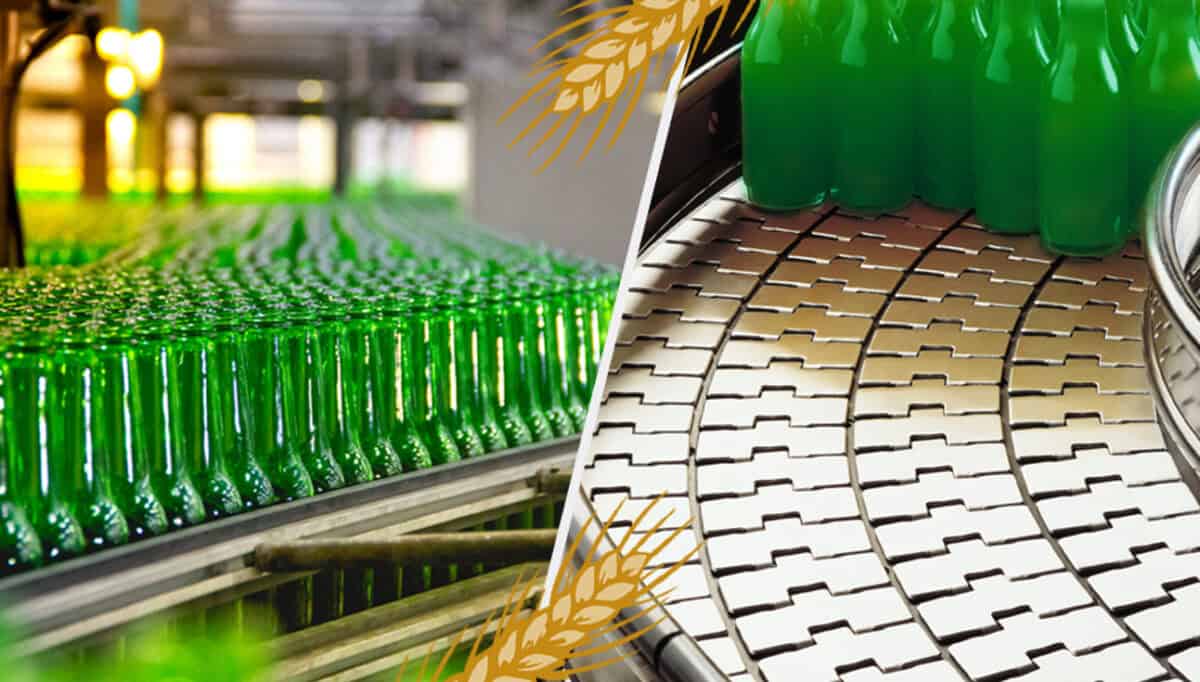
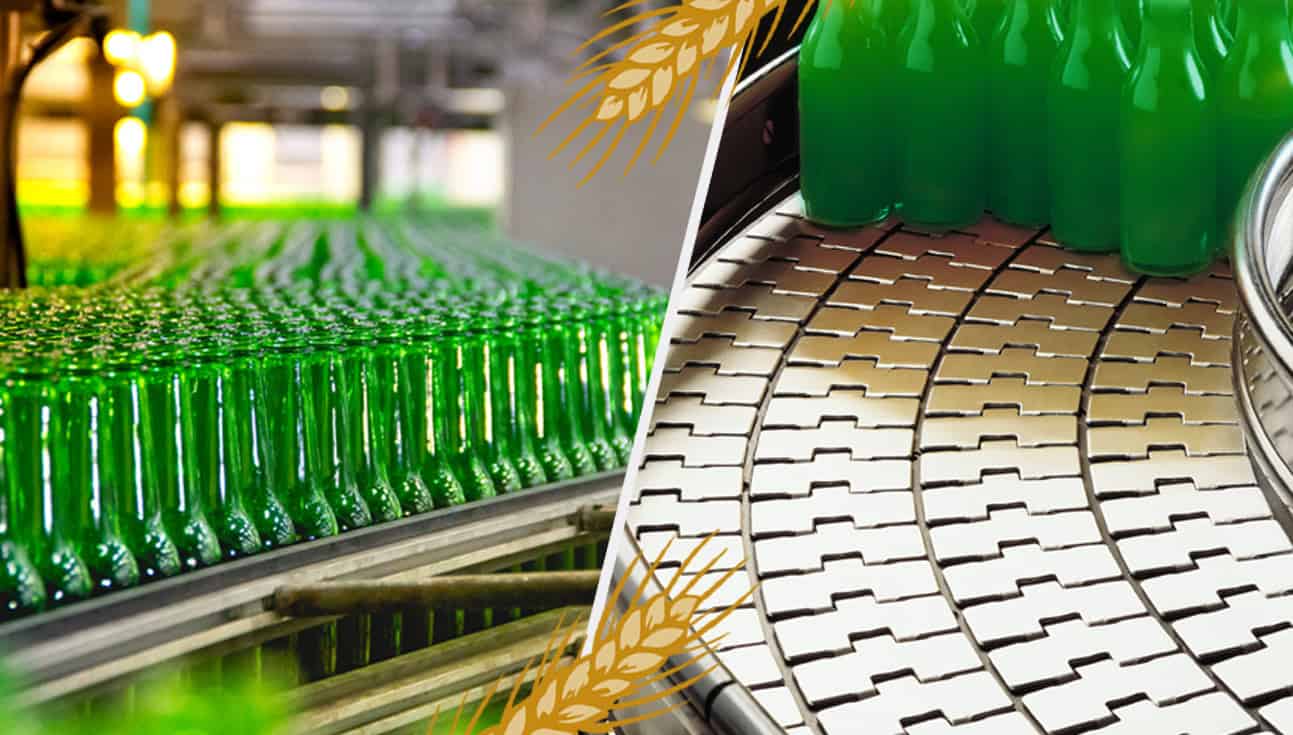
As enthusiasts and aficionados across the U.S. raise their glasses to celebrate National Beer Day, MIR Belting is joining in the festivities by spotlighting the indispensable role that the Slap Top Chain belts we provide play in the beverage industry-especially in beer production.

In an industry where efficiency and reliability are nonnegotiable, MIR offers Slat Top Chain belts as a trusted solution for breweries of all sizes. Known for their durability and versatility, these belts support the fast-paced demands of beer bottling and canning lines, helping ensure a smooth transition from brew kettle to finished product.

What truly sets the Slat Top Chain belts we supply apart is their ability to handle a wide range of container shapes and sizes with ease, along with their outstanding resistance to the corrosive effects of hops, yeast, and the cleaning chemicals commonly used in breweries. Their modular design also enables quick repairs and easy adjustments—minimizing downtime and keeping production lines running efficiently.

But it’s not just about technical performance. MIR Belting’s dedication to innovation and quality is reflected in every Slat Top Chain belt we provide, mirroring the same craftsmanship and passion that brewers bring to every batch. It’s a partnership that enhances production efficiency while supporting creativity and experimentation that defines today’s craft beer movement.

Whether you’re brewing small batches or managing high volume- production, MIR delivers dependable conveyor solutions that keep your lines moving—and your operation brewing without interruption.

Belting solved. https://www.mir-belting.com/belting-solved/

Celebrating National Potato Chip Day: How Belting Solutions Support America’s Favorite Snack

Potato chips are a timeless everyday snack—whether they’re shared at celebrations or grabbed during a busy workday. But behind every perfectly crisp, seasoned chip is a series of precise steps that take a simple potato and transform it into the snack we all know and love.

To celebrate National Potato Chip Day, MIR is peeling back the curtain on how potato chips travel from the production line to the final product, showcasing how two belts from our partner Movex play essential roles in keeping the process moving smoothly.

In the early stages of production, whole potatoes are washed, peeled, sliced, and rinsed as they move toward cooking. As the process shifts into the mid‑production phase, those thin slices move through frying and seasoning—moments where maintaining gentle, consistent product handling becomes essential for quality.

Potato

Post‑Seasoning Elevation & Metering

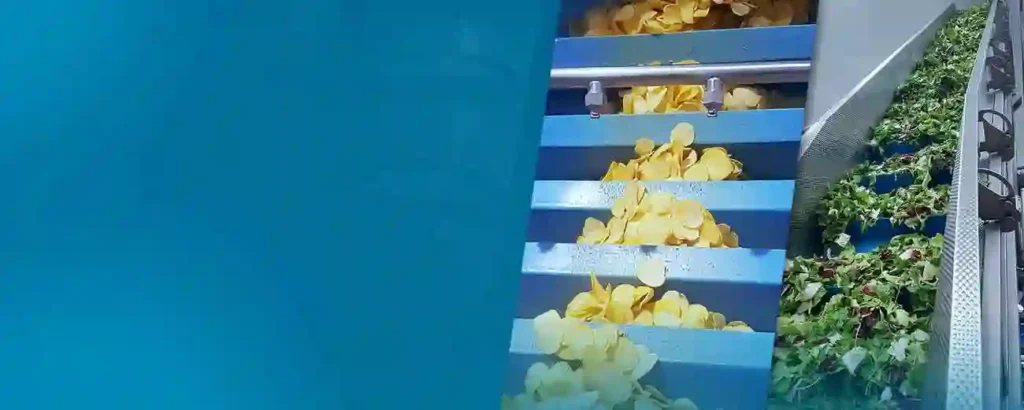
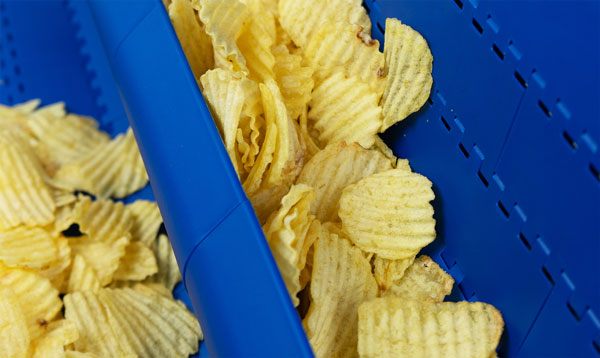
For the incline and flow‑control work that happens after seasoning and before packaging, MIR recommends the Movex 7010 with flights. The flighted lanes prevent chips from slipping on inclines, organize product into channels for inspection or multi‑head weighers, and maintain a steady feed to downstream equipment—all while handling finished chips gently to reduce breakage. The 7010 platform is engineered for demanding food‑processing lines and can be configured with perforated tops and flight accessories to support elevation and controlled movement at this mid‑to‑late stage.

Post‑Fry Cooling, Drainage & Final Transfer

As chips move across straight‑run conveyors for cooling, oil removal, inspection, and the final handoff to weighing and packaging, processors often rely on the Movex 7585 Flush Grid. Its open‑area design promotes airflow for cooling, allows excess oil to drain, and ensures smooth, gentle transport through inspection and final transfer. This style of modular belting is widely used across the snack sector for its balance of hygiene, product protection, and consistent throughput.

From post‑seasoning elevation to final cooling and transfer, the right belting solutions help keep chips moving smoothly through the final stages of production and ensure the quality consumers expect — that’s Belting Solved.

Back Contact Us